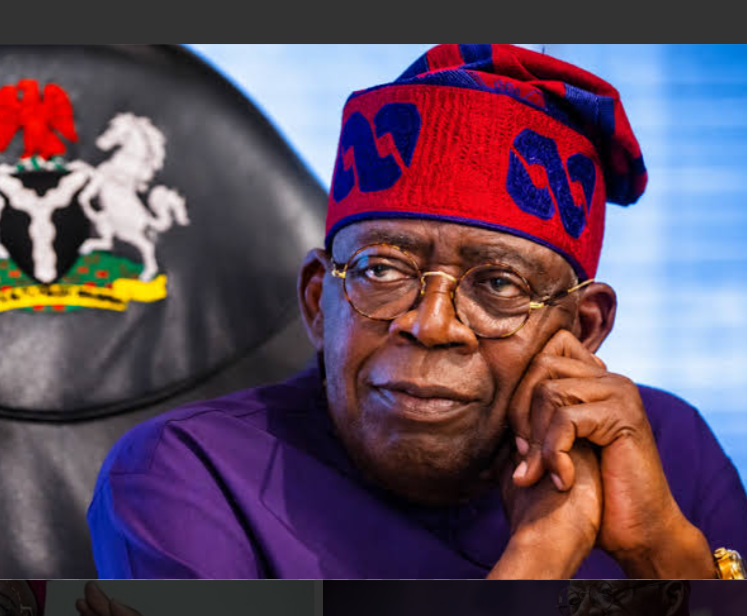
Kano is emerging as a central battleground in the run-up to Nigeria's 2027 presidential election, with President Bola Tinubu among those watching the state closely, according to Vanguard News. The outlet reports that the same three figures are again competing for Kano's votes: Tinubu of the All Progressives Congress (APC), Alhaji Atiku Abubakar of the African Democratic Congress (ADC), and Mr Peter Obi of the Nigeria Democratic Congress (NDC).
The state's voting history gives the contest its edge. In 2023, Kano was carried by Senator Rabiu Musa Kwankwaso of the New Nigeria People's Party (NNPP), who finished with 997,279 votes, Vanguard News reports. Tinubu placed second there with 517,341 votes. Atiku, then the People's Democratic Party (PDP) candidate, received 131,716 votes, while Obi, running on the Labour Party (LP) platform, took 28,513.
Why it matters
Kano is described by Vanguard News as the commercial nerve centre of northern Nigeria, and the outlet frames the state as a prize that all three contenders are pursuing. For Tinubu, the question is whether he can improve on the 517,341 votes he recorded there four years ago. For his rivals, the question is whether the coalition of support that delivered Kano to Kwankwaso in 2023 can be reassembled behind a different candidate or a different party.
The answer matters beyond Kano's borders. A large northern state that voted against the eventual winner in 2023 becomes a test of whether that result was a one-off or a lasting shift in the region's voting behaviour.
What has changed since 2023
The candidates are the same, but their positions on the ballot are not. Vanguard News notes that Kwankwaso, who won Kano as a presidential candidate last time, is now Peter Obi's vice presidential running mate rather than a main flag bearer. That raises a question the outlet puts directly: will Kano voters extend him the same level of support now that he is not at the top of the ticket?
Atiku's platform has also changed. Having contested in 2023 under the PDP, he is now running on the ADC ticket. Vanguard News describes him as a fellow northerner and asks whether Kano voters might move their support toward him on that basis.
Tinubu, by contrast, remains the APC candidate, and the outlet asks whether Kano voters will back him and lift his total above the 517,341 he secured in 2023.
The numbers behind the contest
The 2023 result in Kano was not close at the top. Kwankwaso's 997,279 votes put him well ahead of Tinubu's 517,341, a gap of roughly 480,000 votes, based on the figures reported by Vanguard News. Atiku and Obi trailed far behind, with 131,716 and 28,513 respectively.
Those totals set the benchmark for 2027. For Tinubu to surpass his previous showing, he would need to draw support from somewhere beyond his 2023 coalition — either by converting voters who backed Kwankwaso or by turning out supporters who stayed home. For Obi and Kwankwaso, the task is to transfer a personal vote tally into a joint ticket. For Atiku, it is to rebuild a northern base under a new party label.
Vanguard News does not offer projections for 2027, and none of the campaigns' Kano tallies for the coming election are known. The outlet's report is framed around the open questions rather than a predicted outcome.
What to watch
The state's importance is not new. Vanguard News notes that Kano has drawn attention in past presidential cycles as well, and that it is again a focus for all three candidates. What is different this time is the arrangement of the field: an incumbent president seeking a second term, a former vice president on a new platform, and a former state-level powerhouse now running in the second slot.
How Kano's voters respond to that reshuffling will be one of the clearer signals of how the north is leaning. The next concrete marker will be the candidates' campaigns in the state and, ultimately, the 2027 vote count itself.